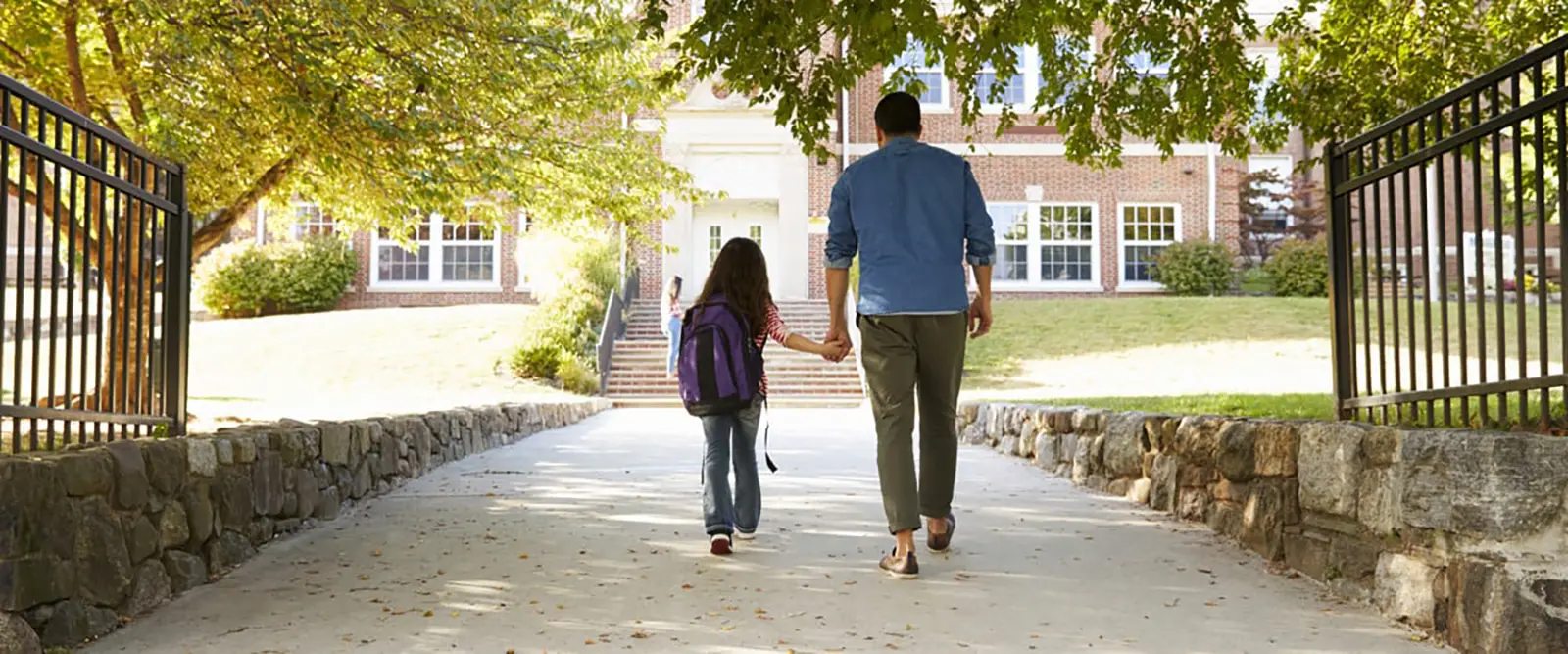
It starts small. A stomachache on Monday morning. Tears in the car. A teenager who suddenly needs to leave class and go to the nurse. And then one day your child looks you in the eye and says they simply cannot go.
School refusal is surging right now across the Bay Area and nationally. Parents in local Facebook groups and community forums are asking about it constantly, often in the same desperate terms: Is this anxiety? Is this my fault? Should I push them or let them stay home? When does this become serious?
You're not alone, and this isn't a parenting failure. But it does deserve a thoughtful response, because how you handle the early signs matters a lot.
School refusal is not the same as truancy. Kids who refuse school are usually not sneaking off to hang out with friends.
First, is this a phase or something more?
Almost every kid resists school sometimes. But school refusal, where a child is genuinely unable to attend despite wanting to, is different from ordinary reluctance. The key signals to watch for:
What's usually driving it
School refusal almost always has an emotional root. It's the symptom, not the cause. The most common drivers:
- Generalized anxiety that's grown large enough to make routine things feel threatening
- Social anxiety: fear of judgment, embarrassment, or not knowing how to navigate peer dynamics
- A specific fear at school: a bully, a particular class, a social situation
- Separation anxiety, especially after a transition like changing schools or a difficult period at home
- An unidentified learning difference: when reading, writing, or focusing feels much harder than it looks for everyone else, school becomes an exhausting place to be
- ADHD-related fatigue and masking: children with ADHD often spend enormous energy just trying to hold it together during the school day, staying seated, filtering impulses, forcing focus on material that doesn't engage them. By the time they get home, they're depleted. Home feels better because they can move at their own pace, follow their own interests, and let their brain work the way it naturally wants to. Over time, the contrast between how exhausting school feels and how easy home feels can make a child dread going back
- Depression, which can look like avoidance but has a different shape underneath
Here in the Bay Area, there's an additional layer: academic pressure. Kids as young as elementary school are picking up the message that their performance determines their worth. That's an enormous thing to carry into a building every day.
What helps, and what tends to make it worse
The instinct of many parents is to either push hard ("you have to go, period") or accommodate fully ("okay, stay home today"). Both extremes have downsides.
Pushing hard without addressing the underlying fear can increase distress and erode trust. But extended time at home typically makes reentry harder: anxiety grows in the absence of the feared thing, not through exposure to it.
- Validate the feeling, not the avoidance. "I can see this feels really hard" is different from "okay, you don't have to go." You can acknowledge the distress without reinforcing the message that school is something to escape.
- Get curious before getting directive. Ask open questions. What specifically feels bad? When does the dread start: the night before, the morning of, in the car? The more specific the fear, the more specifically it can be addressed.
- Work with the school. Teachers and counselors can often make small accommodations, like a check-in person, a modified transition plan, or a quiet space, that significantly lower the barrier to walking in.
- Take small steps back toward school. For some kids, returning all at once is too much. Gradual re-exposure (driving to the parking lot, going for one period, showing up for lunch) can help rebuild confidence over time.
- Look into what's underneath. If a learning difference might be playing a role, getting an evaluation can be genuinely life-changing. Once a child understands how their brain works and gets the right support at school, the building can start to feel like a place they belong.
When to dig deeper
If school refusal has been going on for more than a few weeks, or if your child seems to be working harder than their peers for the same results, it's worth asking whether a learning difference might be part of the picture.
A psychoeducational evaluation can identify whether ADHD, dyslexia, anxiety-based learning challenges, or other factors are at play, and give you and your child's school a clear, specific roadmap for support.
You don't have to guess anymore. Understanding why school feels hard is often the first real step toward making it feel manageable.
Leave a Comment
Your email address will not be published. Required fields are marked *